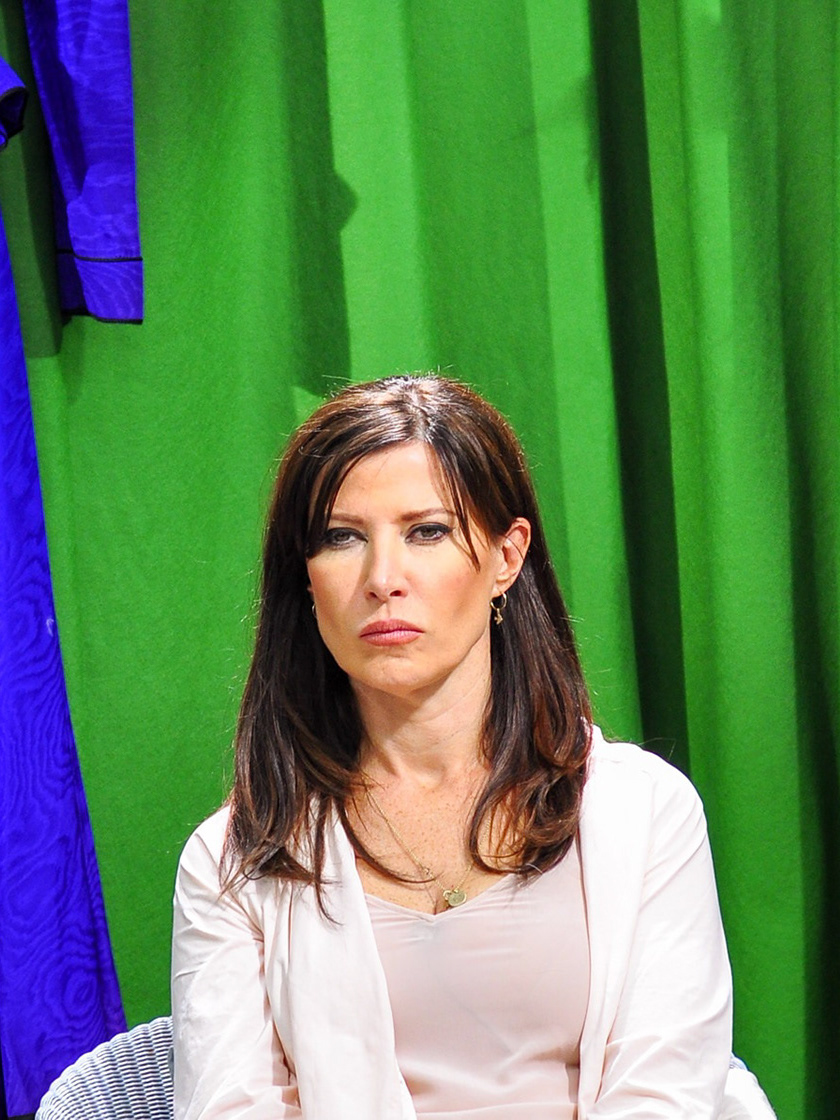


Sadie Rose Kavanagh
Sadie was born on June 9th. She is noisy and just a little bit strange.
Now. Everything’s changed. I’ll never be the same. Because of you.
MUNCH - my honours project
There is growing concern in the United Kingdom regarding the state of the nation’s health; an issue arising from unsuitable dietary habits. The media is awash with news articles and television programmes dedicated to how we can address this situation and what we need to do to improve our lifestyles. The health risks of a bad diet are very real and are the cause of a growing number of fatalities; due to heart disease and links to cancer.
Increasingly, schemes to promote healthy eating to the younger generation are being given strong support. This includes the vociferous demands of high profile celebrities such as Jamie Oliver; campaigning for healthier meals in schools. In October 2005, some of Britain’s top food writers responded to the news that Burger King had publicly opted out of a healthy eating initiative by sending an open letter to Tony Blair. (Leake, J., 2005). The advantages of educating children in these matters are clear; but regrettably, there is a conflict of interests between those concerned with loss of revenue and those attempting to affect change. Consequently, the healthy eating message is drowned out by the fast food advertisers who persistently target children.
In Scotland, one in five children are obese (Contini, M., 2005) and it is predicted that these figures will rise if healthy eating habits are not established from an early age. In order for this to happen, children need the knowledge to make appropriate food choices. A huge effort to incorporate health and nutrition into the curriculum of Scotland’s educational system has been driven by the Scottish Executive. In Edinburgh, The Edinburgh Grid for Learning has various healthy eating schemes to which schools readily subscribe. Duddingston Primary is one such school, and a class of its pupils, along with the staff, are the participants in the research of this project.
The main focus of the MUNCH project is in applying Multimedia to the problem identified above. In order to investigate this possibility, an expansive review of literature was undertaken. This included material from such diverse realms as child psychology, marketing and advertising, Multimedia design for children and user-centred design. A pivotal area of research was naturally that of the design of software for children. This requires that distinct approaches are applied from those utilised in other areas of computer software design.
Decades of research into involving users in design have resulted in specifically child-centred methodologies. Where once the user and the customer were central to the design process; it is fitting that the user group of children are now recognised. Child-centred design (CCD) as an ethos first emerged in the 1970’s, was popularised by researchers at the University of Maryland in the 1990’s, and continues to be adapted for individual purposes. However, it has not yet received sufficient recognition to propel it to public consciousness.
This project subscribes to the theory that the ingenuity of children is often underestimated. Support is given to the CCD researchers who assert that children can successfully contribute to the design of their own software products; and that they deserve that opportunity. Therefore, a software artefact was designed that was informed by the review of literature, and that involved children as active participants.
4Wood Interiors (update)
I’m just putting the finishing touches to the Web site of proabaly the best solid surface company in the world, 4Wood Interiors.
Photography by Andrew Kavanagh
Here is a shot of mine from the streets of Edinburgh. Anyway, the reason for this post is to announce that a selection of my photos are now available for purchase here. If you require a specific shot from my Flickr photostream, please let me know.
Digital radio
Radio in the public sector emerged over eighty years ago. In the years that followed, it was superseded by television in many homes as the hub of information and entertainment. Nevertheless it is still valued by a great number of people worldwide. In the modern digital arena, radio is still popular; retaining a unique place in peoples’ affections. It is prized for delivering ambient music and speech, and may even be regarded as “company” to some. Accordingly, the governing bodies of various countries have responded to this public “pull” by introducing new services and programming via digital radio. In the United Kingdom particularly, large sums have been spent on securing radio’s future. The BBC, who offer world respected services, are eager for radio to maintain its “central place on the media landscape, delivering social, cultural, democratic and economic value to its citizens” (BBC, 2004b). In order to move with the times, radio has to embrace new technologies and distribute new services digitally. It is partially by keeping abreast of technological advancements that radio has secured its popularity up to the present day.
THE MOVE TO DIGITAL RADIO
The United Kingdom and Sweden were early DAB (Digital Audio Broadcasting) pioneers with the first transmitters appearing in these countries. In the UK, heavy investment in digital radio was made by the BBC, in conjunction with what a BBC report (BBC, 2004b) refers to as “unparalleled cooperation among its many stakeholders.” This meant that the government, broadcasters, manufacturers and retailers all contributed to driving the success of digital radio.
Initially, DAB appeared as a high-end Hi-Fi option or in expensive in-car audio systems. There were two pivotal events which transformed DAB from a technology marketed to audiophiles, to a mainstream product:
• In 2001, the UK government approved five new digital-only stations.
• In 2003, expansion of commercial and BBC radio transmitter networks coincided with the arrival of affordable digital radio hardware.
It was in 2003 that the market for DAB receivers in the UK exploded. Merchandise originally sold on the premise of improved sound quality for the discerning ear was now promoted via its improved services and increased choice for listeners. Public adoption of digital radio in the UK was swift, with 330,000 radio sets being sold in the twelve months to the end of January 2003 (BBC, 2004b).
The early adopters of DAB were followed by other nations worldwide, each adopting their own strategies for the rollout of digital radio. In many quarters, DAB has been criticised for its sound quality; and countries such as Australia delayed their integration of digital radio services, pending investigation into technological alternatives. This culminated with the development of the new DAB2 standard.
Presently, digital radio is delivered by utilising various technologies, and can be accessed via a range of technologies: digital radio receivers; satellite and digital TV boxes and over the Internet. In the next chapter, the specifics of the technologies involved in digital radio are analysed in greater depth. This is supported by a discussion of the current state of digital radio, its place in the entertainment market and future possibilities.
A Critical Analysis of Digital Radio
HOW DIGITAL RADIO WORKS
The radio spectrum (commonly referred to simply as spectrum) is described in a BBC report (2006) as being “the home of communication technologies such as mobile phones, radio and television broadcasting, two-way radios, broadband services, radar, fixed links and satellite communications;” and these are not the only technologies involved. It is clear that a “finite resource” (BBC, 2006) such as radio frequency spectrum has to be apportioned wisely; particularly if one considers that digital radio will share space with fresh services such as HD (High Definition) TV. National governments are responsible for spectrum planning and the granting of broadcasting licenses therein. In the UK, the independent regulatory and competition authority is Ofcom (Office of Communications). This governing body has released spectrum for national and local digital radio services, with more planned for the near future.
Radio and spectrum
AM radio is broadcast at the lower frequencies shown to the left of the diagram above, and FM radio operates in the VHF frequencies. In the UK - and various other countries - a block of frequencies called a ‘multiplex’ make up a digital signal, which is delivered in band III of the spectrum. Whilst in other countries, the L band, or a combination of both, is used.
T-DAB (Terrestrial) multiplexes are the technology by which multiple radio stations may be combined in one signal. This means that the need for individual frequencies is largely avoided. For instance, most BBC services (with the exception of Gaelic and more specialised stations) can be found at the same frequency. The major benefits of this are a reduction in spectrum usage, less power consumption and cheaper operational costs. Listeners will find that, unlike analogue radio, digital radio requires no re-tuning when moving between geographic regions.
The digital data signal carries more than just audio, displaying its worth as a multimedia service. It is possible to embed any of the following to enhance a digital radio transmission:
• Text and images.
• The title of a track and a picture of the artist.
• The name of a radio show, phone numbers and Email addresses etc.
• Up-to-date news headlines, traffic and weather reports, sports results etc.
• An electronic programming guide (EPG).
• Java-based games.
THE TECHNOLOGIES AND STANDARDS
No one standard for transmitting digital radio has been adopted worldwide. Yet the DAB standard, in various guises, is by far the most popular implementation. Indeed, an article on the Website of the Digital Radio Development Bureau claims that “DAB set penetration is set to top 50% household penetration by 2010.” The major exceptions are the USA, where digital Direct Satellite Broadcasting (DSB) and HD (High Definition) radio are preferred; and Japan, who have a bias toward cable for delivery of new radio formats.
Digital radio is by no means immune to the issues affecting any technological innovation. The world of technology is characterised by remarkably fast change, and this impact is apparent in recent developments in the digital radio market. The World DMB organisation, in charge of the promotion and safeguarding of DAB standards, recently announced that they have adopted the AAC+ audio codec as the basis for DAB. Previously, the standard used the “obsolete and much less efficient” (Schofield, 2006a) MP2 codec. The Name DMB also reflects recognition that the standard offers far more than just audio. Hence, the body formerly known as World DAB (Digital Audio Broadcasting) has become World DMB (Digital Multimedia Broadcasting). DAB, and the other technologies relevant to digital radio, are discussed in detail below.
Digital Radio Broadcasting (DAB)
DAB Digital Radio was developed by a consortium of manufacturers and broadcasters known as ‘Eureka-147’, who lent their name to the standard from which DAB evolved. In 1994, Eureka-147 was recognised as a world standard and the adoption of DAB began to gather pace. The network coverage of DAB Digital Radio is now estimated in the region of 500 million people across the globe.
DAB is a combination of MPEG 1 Layer 2 (MP2) and COFDM (Coded Orthogonal Frequency Division Multiplex) technologies. The former is the audio codec and the latter ensures a robust transmission signal. The ‘multipath’ interference that blights FM (Frequency Modulation) radio reception is eliminated in DAB, due to constant monitoring of the digital signal. FM radio listeners are familiar with the degradation of the analogue signal quality; caused by anything from high buildings to atmospheric conditions. Conversely, DAB is not susceptible to such problems and the digital signal is far more stable. However, it should be noted that if a digital signal is lost completely, it will not die gracefully. While interference to an analogue signal may cause increased hiss and crackle, a digital signal may simply disappear.
The nations who were the earliest advocates of DAB (UK, Denmark, and Sweden) now have established digital radio networks with rising audience figures. This success story is tempered somewhat by changes taking place in the digital radio landscape. Specifically, now that DAB has adopted the new AAC+ audio codec, the countries identified may find that they are tethered to an outmoded technology. Switching to the DAB2 format results in much better sound quality at the same bitrates as MP2, due to the compression technology involved. However, millions of DAB radios would be rendered useless due to incompatibility if a transferral to an updated system occurred.
In the UK, the BBC has come under fire for electing to keep faith with the MP2 flavour of DAB, and for their method of implementation. The BBC’s (2004b) stance is that they opted to continue with the current version of DAB to avoid interruption to public services; arguing that content, rather than technology, is vital to digital radio’s progression. In a Web article for the Guardian newspaper, Schofield (2006b) questions that the BBC’s policies have the British public’s interests at heart. The BBC transmits all but one of its radio stations at a bitrate of 128 kbps; but it is revealed that “the BBC’s own research says that MP2 needs 256 kbps to sound good, while 224 kbps is often adequate.” Furthermore, there is theoretically nothing to stop the BBC transmitting radio at higher bitrates via satellite, but they choose to deliver radio via digital television at bitrates between 128 kbps and 192 kbps. The fact remains that DAB is widely promoted by the BBC but it currently offers its listeners “1982 CD quality” (Schofield, 2006b).
Digital Radio Mondiale (DRM)
DRM was conceived as an effort to digitise existing AM (Amplitude Modulation) radio services. AM incorporates the SW (Short Wave), MW (Medium Wave) an LW (Long Range) frequencies of the broadcasting spectrum. These are lower frequencies than FM and as such, have noticeably lower sound quality. Irrespective of the quality of the listening experience, AM radio stations are still popular, and there are benefits to operating at the lower end of the spectrum. Therefore, DRM arose from the desire to exploit the popularity, global reach, and cost-effectiveness of AM in a digital format. A report by Ofcom (2006) maintains that “DRM could be a complement to DAB rather than an alternative;” and regarding DRM in this way is crucial to the survival of AM radio. The large numbers of listeners could benefit greatly from no perceptible change to their programming, other than a marked increase in quality. Meanwhile the broadcasting companies could still operate inexpensively and augment their existing services. This is made possible in part, by DRM’s adoption of DAB2. The utilisation of the AAC+ codec means that near FM sound quality is achievable at a bitrate of 128 kbps on the AM network. A further advantage is that local stations, often unable to afford the costs of transmitting via DAB, may have an alternative route into digital radio.
Digital Satellite Broadcasting (DSB)
This is the favoured method of delivering digital radio in the Untied States and Canada. In the USA, there is insufficient spectrum to allow for the porting the country’s tens of thousands of radio stations to a digital network. Hence, DSB – along with HD Radio - were chosen to operate within existing AM and FM bands. The quality of the transmitted signal is akin to that of CD, but can be variable. As a result of attempting to spread a huge number of stations over the limited bandwidth, the audio sometimes does not even reach FM quality. This situation is comparable to DAB in the UK, where quality has been sacrificed for quantity. There are currently three major players in the filed of DSB; these are ‘Sirius’ and ‘XM’ in the USA; and ‘WorldSpace’, who cover Europe, Asia and Africa.
Web radio
It is possible to listen to a vast range of radio stations via the Internet; with content from around the world available to ‘stream’ to media players or download for listening at the users’ leisure. The most popular media players for streaming media are: QuickTime©; Real© and Windows Media Player©. Whereas media downloaded in the form of a ‘Podcast’ may be played back in software such as Apple’s iTunes©. Owing to the platform of Web radio, a balance has to be struck between quality and accessibility. The producers of streaming media are bound by the limitations of connection speeds and the expense of transmitting data at high bitrates. Therefore, the audio quality of Web radio is generally fairly low to allow for bandwidth issues and to ensure that it available to those with lower web connection speeds.
A summary of other technologies and standards
The remaining technologies in this sphere are extensions of existing implementations, and are largely geared towards the convergence of digital media (discussed below). If digital radio is to be truly regarded as a multimedia service, as World DMB intend, then DAB will surely be extended in tandem with new standards. Perhaps the most commonly recognised of the latest carriers is DVB (Digital Video Broadcasting); which is split into two sectors: DVB-H (handheld) for broadcasting signals to mobile devices, and DVB-T (Terrestrial) for television broadcasting. Other examples include ISDB (Integrated Services Digital Broadcasting) in Japan, and Sun Microsystem’s ‘JavaTV’.
CURRENT TRENDS IN DIGITAL RADIO
Digital radio is certainly a growth market; sales of hardware are healthy and the numbers of listeners are increasing. Figures released by RAJAR in the UK - as published by DRDB - show that there is no hint of a decline and that “DAB remains the choice for digital listening, delivering more than DTV (digital television) and the Internet combined” (DRDB, 2006). This public draw has been observed by large technology and broadcasting companies; and the marked interest of corporations such as the BBC, Channel 4 and Microsoft is apparent.
The BBC was quick to recognise the importance of digital radio in the context of convergent media, and the possibilities of DAB radio enhancements. They continue to promote the utilisation of improved services via digital radio (including radio on demand via programmable EPGs) so that radio can blend into the evolving Multimedia landscape. Their manifesto for radio programming mirrors the aims of the majority of digital entertainment providers: affording users the customisable services they have come to expect. If one considers an ‘intelligent’ system such as Sky+, where programmes are automatically recorded and tailored schedules can be created, it is natural that the public will soon demand the same levels of flexibility from radio. This is usefully summarised in the BBC’s (2004b) review of DAB as “choice, enhancement and flexibility.”
Channel 4 have recently demonstrated their confidence in digital radio by developing their own station. Presently offering a customisable Internet service, they have plans to bid for a new DAB multiplex. Once more, the emphasis is very much on convergence, with spoken-word versions of popular television shows available and content from music-themed programmes available online to stream or download.
CNET (Olsen, 2006) reports that Microsoft is also keen to flex its muscle in the Digital radio sphere. The computing giant moved to arrest a decline in visitors to its MSN Radio service by enlisting the help of third-party software to improve the level of customisation and social networking it can offer users.
The common themes of greater choice and customisation appear frequently in any discussions of digital radio. Consequently, broadcasters and service providers are identifying the importance of flexible tools in building a loyal and widespread user group. The public enjoy the convenience of such facilities as radio on demand, control over playback of ‘live’ content, personalised music recommendations and access to comprehensive information on musical artists. It is a paradigm shift from “broadcaster to consumer” to the audience as active participants. (BBC, 2004a). The future of digital radio is expanded upon in the next section, Future Scenarios.
FUTURE SCENARIOS
The proliferation of new technologies and devices has contributed to the uptake of digital radio and other forms of digital entertainment. The forecasts of the DRDB – as published by Ofcom (2006) – are strongly related to the ubiquity of new technology. They predict that half of all households will have DAB by 2010 and that two years later, analogue television will be completely phased out. This factor, allied to increased broadband access, will lead to greater use of digital radio services through a variety of platforms. Ofcom (2006) believe that “over time, increased penetration of fixed and wireless broadband services will create new opportunities for audio content distribution.”
The radio industry is in the midst of a unique period of transition. There is still a demand for analogue services but the old business models of analogue radio do not fit with the desires of future consumers or the structure of digital services. Commercial radio stations will struggle to compete while their revenue continues to be stripped by a movement toward Internet advertising.
Conclusions
This report has journeyed through the story of digital radio thus far; from its beginnings in the United and Kingdom and Scandinavia, to the recent DAB 2 standard employed in other countries. DAB was found to be dependent on bitrate implemetations, and the BBC was uncovered as offering an inadequate service.
Radio has to be digitsed to be progressive, and to maintain its public appeal among future generations of listeners. Quality services must be delivered that are scalable, and which meet customer demands of reliability and flexibility.
The coming years will present numerous opportunities for digital radio to prosper internationally. Notably, the increased sophistication of mobile devices will result in greater acess to radio though services such as 3G. If digital radio is to be successfully incorporated in the convergence of telecommunications, computing, information and entertainment, then it must co-exist with technologies such as mobile TV.
There are no immediate plans to switch off exisitng analogue services but there has to be contingency for when that day comes. Planning for the most efficient use of specturm with digital radio technology should begin now.
REFERENCES
BBC – Digital Radio. URL: http://www.bbc.co.uk/digitalradio/
[30 December 2006].
BBC whitepaper (2004a). Renewing the BBC for a digital world.
BBC whitepaper (2004b). DCMS Review of DAB Digital Radio – The BBC Submission.
BBC whitepaper (2006). The Spectrum and its Uses – A simple guide to the radio spectrum.
Department for Culture Media and Sport – Digital radio. URL: http://www.culture.gov.uk/what_we_do/Broadcasting/digital_broadcasting/digital_radio.htm [30 December 2006].
Digital Radio – Wikipedia, the free encyclopedia. URL: http://en.wikipedia.org/wiki/Digital_radio [30 December 2006].
Digital Radio Development Bureau - DRDB. URL: http://www.drdb.org/
[30 December 2006].
McWhinnie, C. September 2004. Fears for new digital radio system. URL: http://news.bbc.co.uk/1/hi/technology/3652202.stm [30 December 2006].
Newell, J.C. (2002). An introduction to MHP 1.0 and MHP 1.1. Research and Development, British Broadcasting Corporation.
Olsen, F. November 2006. Pandora revamps MSN radio. URL: http://news.cnet.co.uk/digitalradio/0,39029668,49285501,00.htm
[30 December 2006].
RAJAR (Radio Joint Audio Research Limited). URL:
http://www.rajar.co.uk/ [3 January 2007].
Schofield, J. November 2006a. Britain refuses to listen to new digital radio format. URL: http://technology.guardian.co.uk/weekly/story/0,,1942267,00.html
[30 December 2006].
Schofield, J. November 2006b. The BBC is shortchanging consumers on
digital radio. URL: http://technology.guardian.co.uk/opinion/story/0,,1948525,00.html [30 December 2006].
UBC Media Group. URL: http://www.ubcmedia.com/ [30 December 2006].
Experiential Design
This was a topic I found particularly interesting as part of my studies. I created a portfolio of essays that may one day form the basis of a Web site. Take a look.
4Wood Interiors
I’m currently working with Mr Martin Scholey in re-designing his Web site. The current version is here.